
— The buyer's guide
Vintage Coach, decoded
A real guide to buying vintage Coach. Not a checklist scraped from the internet, but the eras worth collecting, the silhouettes that hold up, and the small signs we look for in every piece before it joins the archive.
Written for people who want to buy one bag and have it last. Bookmark this page, screenshot the authentication section, and use it the next time you're hovering over a listing.
The Coach eras worth collecting
Coach has been making bags since 1941. Not every decade is worth chasing. These four windows are.
1961 — 1980s
The Cashin Era
Designed by Bonnie Cashin, the woman who taught Coach how to make a bag. Sturdy bridle leather, brass turn-lock hardware, side-pocketed totes and saddle bags. The original Coach DNA — practical, architectural, almost military in its restraint.
Late 1980s — mid 1990s
The Glove-Tanned Era
Made in New York, made in heavy glove-tanned leather, made to last several decades. The Court, the Willis, the Station Bag, the Sheridan. The era when Coach was at scale but still uncompromising about leather grade.
Mid 1990s — early 2000s
The British Tan Era
Warm tans and rich espresso browns, classic single-strap shoulder bags, structured turn-locks. A transitional window when Coach was widening the catalogue but the construction still felt like a small workshop.
2002 — 2008
The Madison & Patent Era
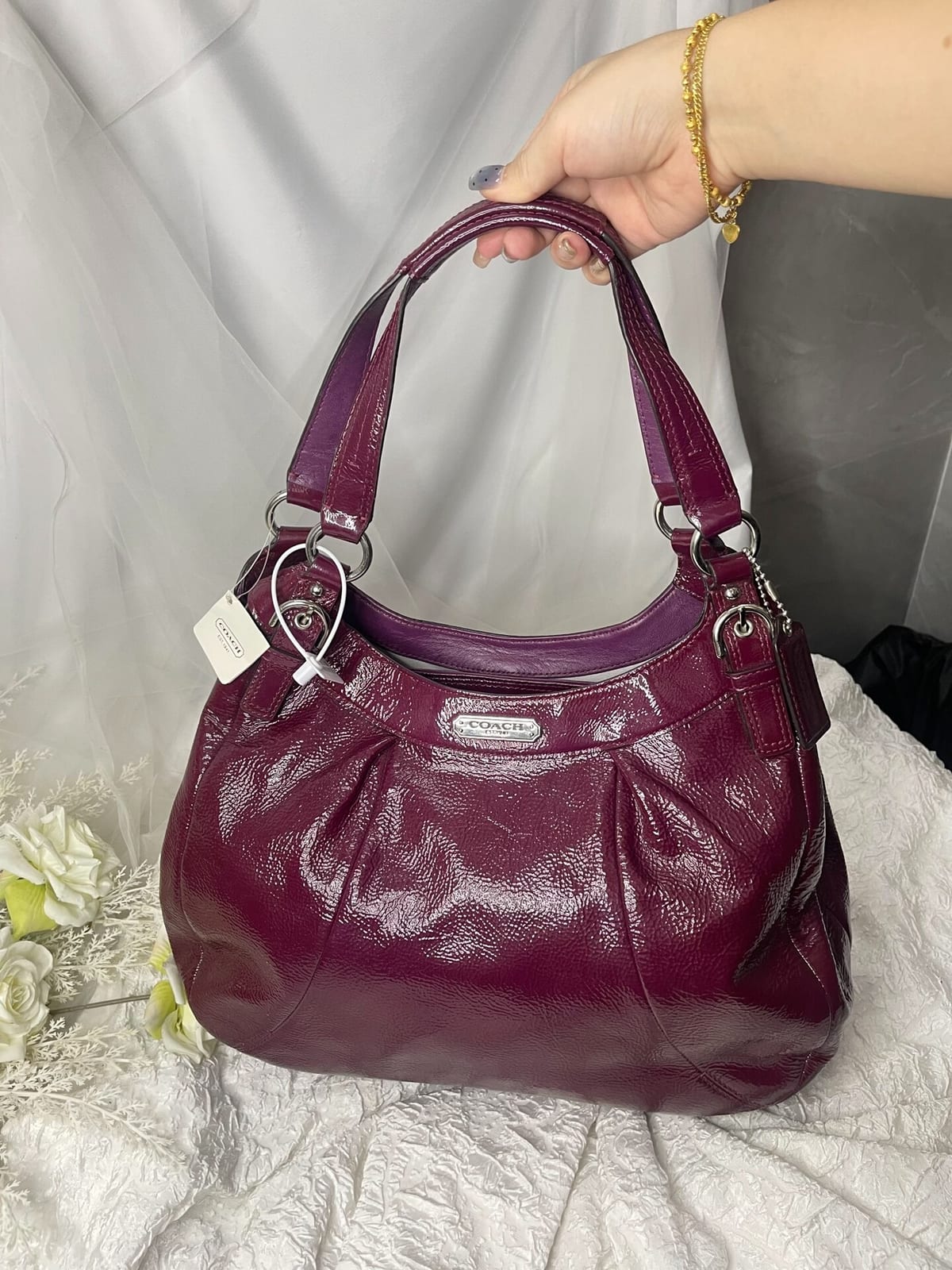
The slouchy hobo years. Patent finishes, signature jacquards, lipstick reds, deep wines, soft blacks. The exact silhouette that has come back into rotation in the last three years — and the era where most of our archive lives.
Coach silhouettes, decoded
The shape names that confuse most buyers. Here is what each one actually means.
Saddle
Curved flap, fixed shoulder strap, structured body. The Coach Saddle is the original — designed by Bonnie Cashin in the 1960s and worn under the arm with a short drop.
Demi
Half-moon silhouette, short strap, sits high under the arm. Smaller than a hobo, structured, often piped. The 1990s and early-2000s Demi is a Y2K cornerstone.
Hobo
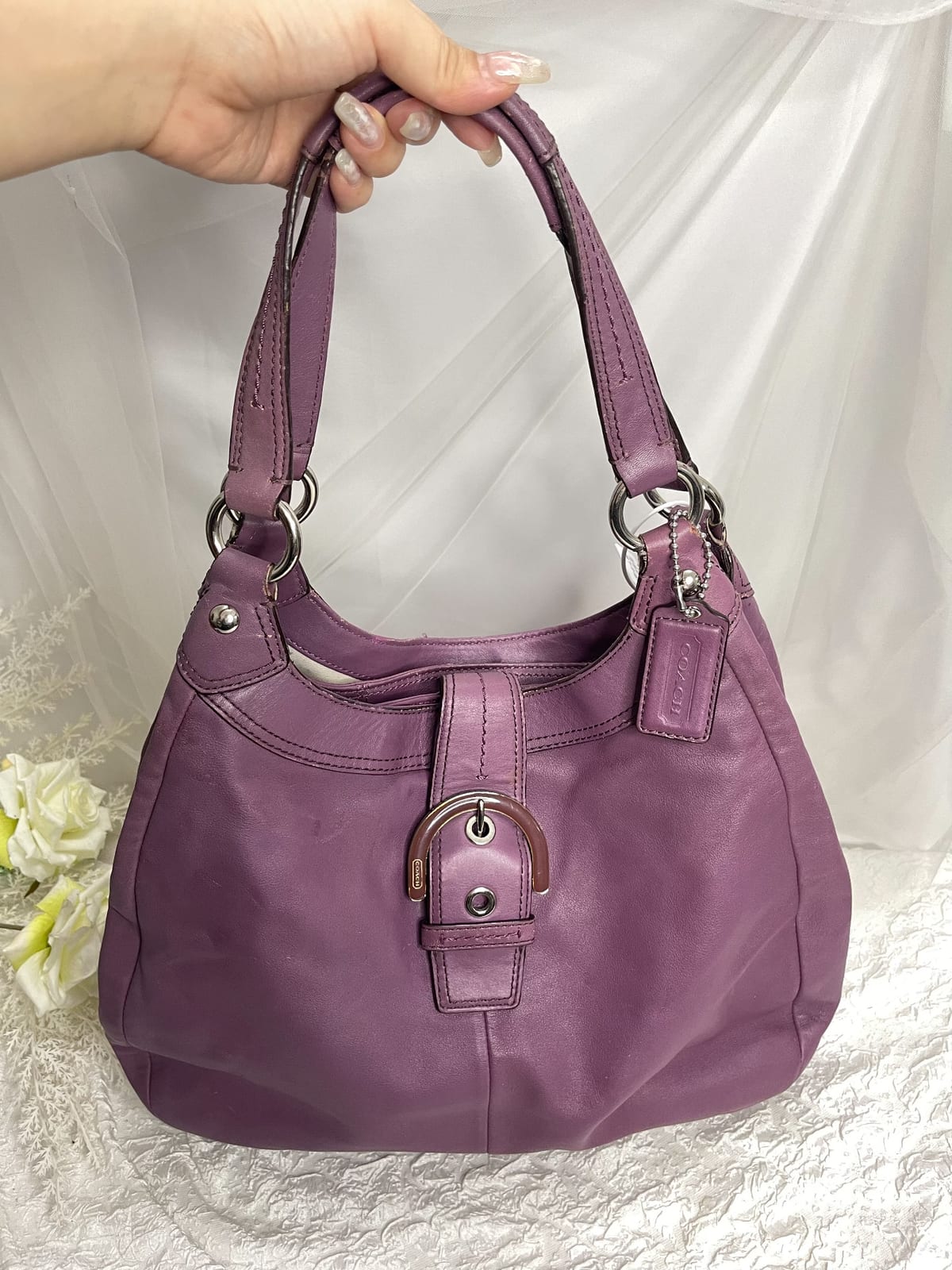
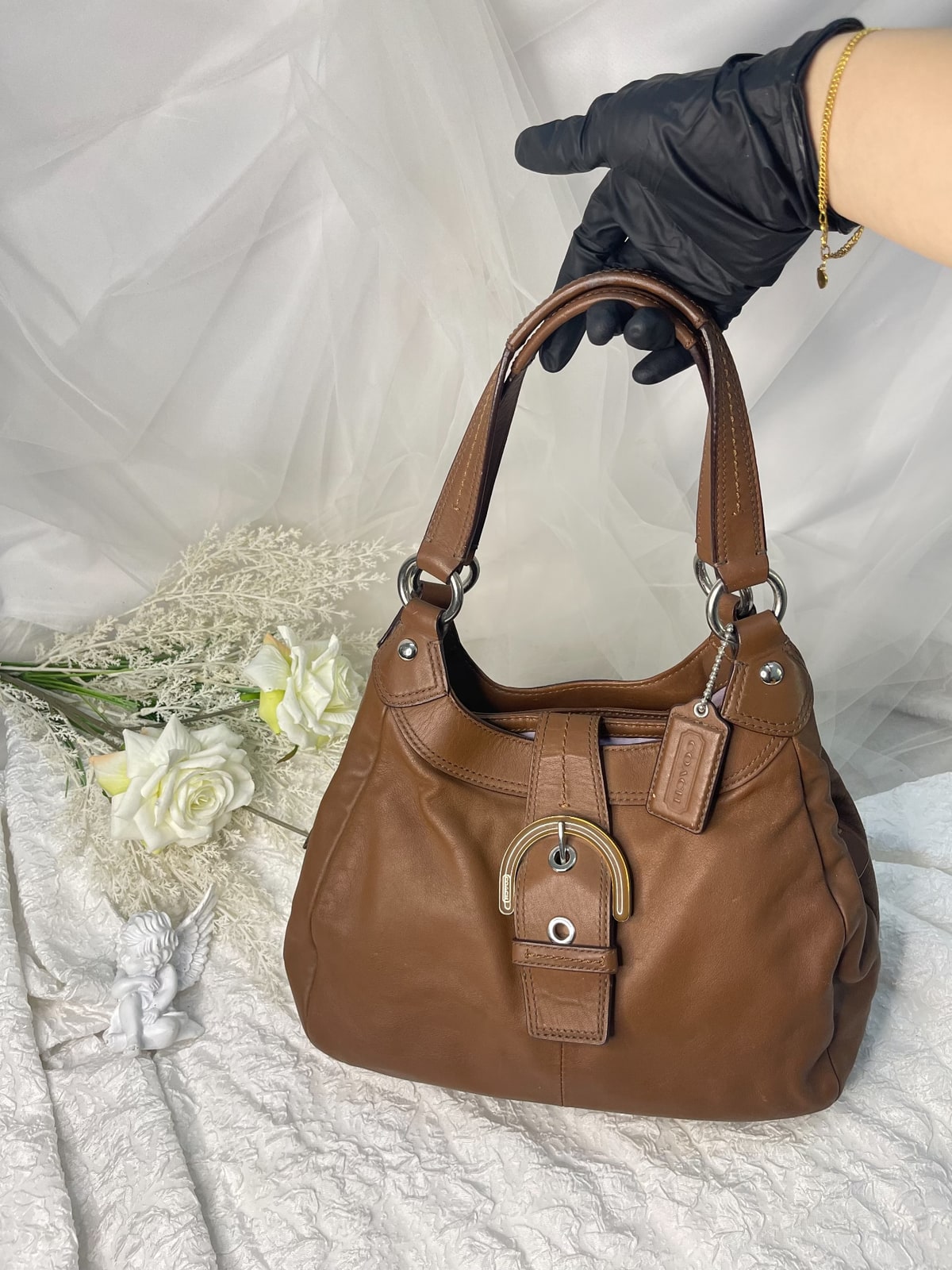
Slouched crescent, soft body, longer underarm drop than a Demi. The shape that dominated the early-2000s Coach catalogue and the one most associated with the era's underarm carry.
Courier
Boxy crossbody, long adjustable strap, often with a front flap. The travel-day Coach, sized for documents, magazines, and a small camera.
Duffle
Cylindrical body, top zip, double handles, sometimes with a shoulder strap. The most architecturally serious shape Coach makes — bridle hide, double-stitched, heavy hardware.
Satchel
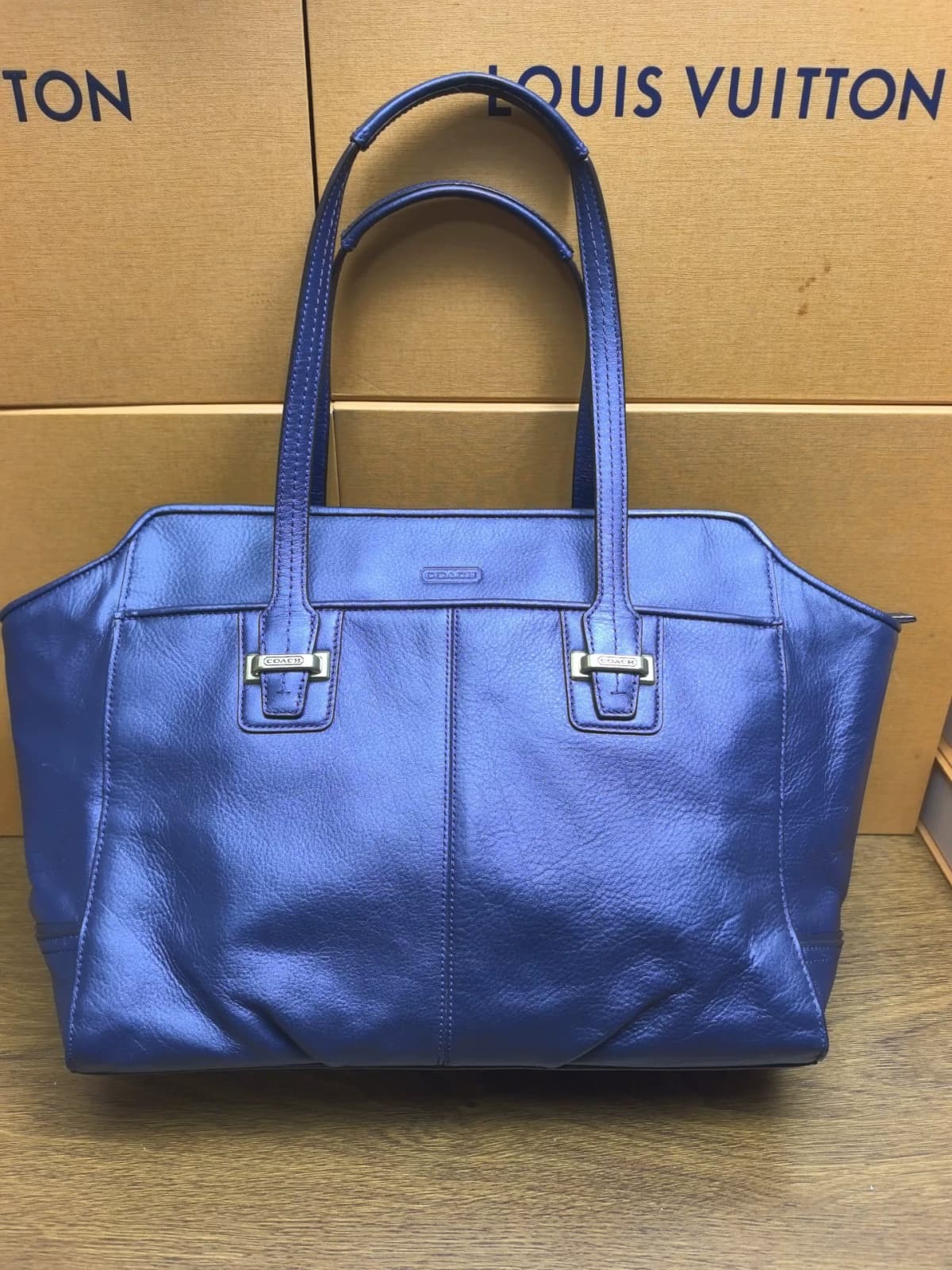
Top handles, structured architecture, often a removable strap. The satchel is the work-day Coach — formal, intentional, built for someone who carries the same bag every day for years.
How to authenticate vintage Coach
Six tells we run through on every piece, in order. None of them on their own is conclusive — but together they make a complete picture.
The leather
Real vintage Coach leather is heavy. It has a slight oiled smell, a soft sheen rather than a plastic glare, and develops a patina rather than cracking. A bag that feels plastic-light or smells synthetic is almost always not period.
The creed stamp
Inside every authentic Coach is a leather patch — the creed — embossed with a serial number. The font is sharp, the embossing is deep, the serial format matches the era. Fakes get the format wrong or stamp it onto coated canvas instead of leather.
The hardware
Solid brass on the older eras, brushed nickel on the mid-2000s. Hardware has weight, an even finish, and engraved branding where applicable. Hollow, plated, or lightweight hardware on anything claiming to be pre-2008 is a red flag.
The stitching
Even, double-row, slightly waxed thread. Stitches per inch are consistent across the bag. Skipped stitches, uneven seams, or thread that pulls easily are tells of a bad copy or a heavily refurbished piece.
The hangtag
Round, leather, brass-grommet, attached by a thin leather cord. The shape and grain are consistent across the era; the embossing is crisp. Many fakes get the proportions wrong, or replace leather with vinyl.
The zipper
YKK or Talon on most authentic vintage. The zipper pull is metal, the teeth are even, the slider moves with weight. Plastic pulls, painted teeth, or a sticky slider are signs the piece has been re-zipped or was never period correct.
When in doubt, ask. We do free pre-purchase verification on any piece in our archive — extra photos, measurements, close-ups of the creed and hardware. Vintage rewards patience.
Caring for vintage Coach
Vintage Coach leather wants two things: occasional conditioning and steady humidity. A neutral leather conditioner every six to twelve months keeps the hide supple. Avoid silicone-based polishes — they look fast and dull the patina you bought the bag for.
Store it stuffed lightly, in its dust bag if you have one, away from direct sun. The leather doesn't mind being used. It minds being forgotten in a humid wardrobe for three years and pulled out cracked.
Shop the archive
A short selection of what we currently have in the Coach archive. The full collection lives on the Vintage Coach page.
 New In
Emily's Archive
Burgundy Patent Hobo Bag
 New In
Emily's Archive
Lilac Soft Leather Hobo Bag
 Rare
RareEmily's Archive
Cognac Soft Leather Hobo Bag
 New In
Emily's Archive
Blue Structured Tote Bag
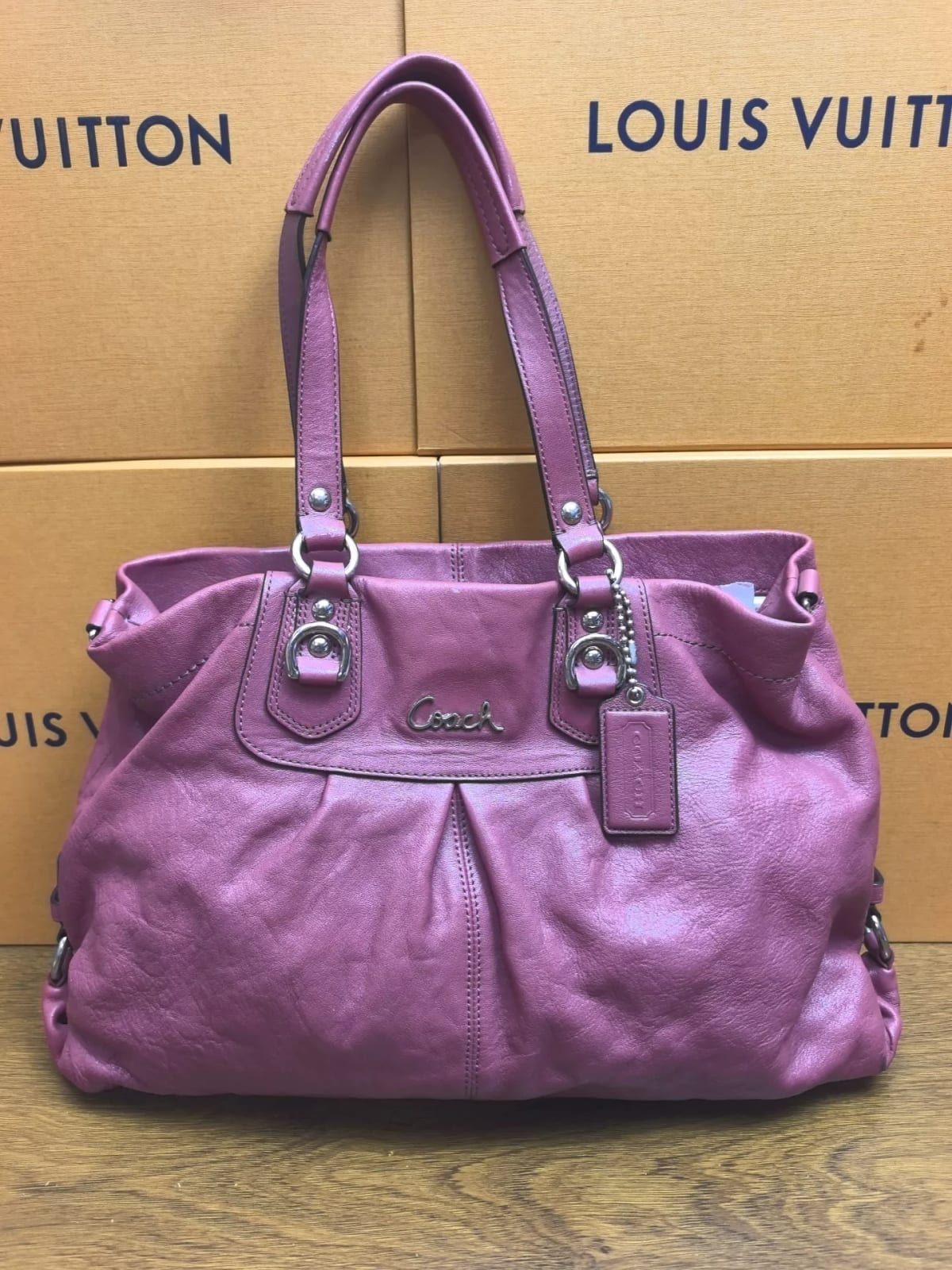
Emily's Archive
Pink Pillow Tote Bag
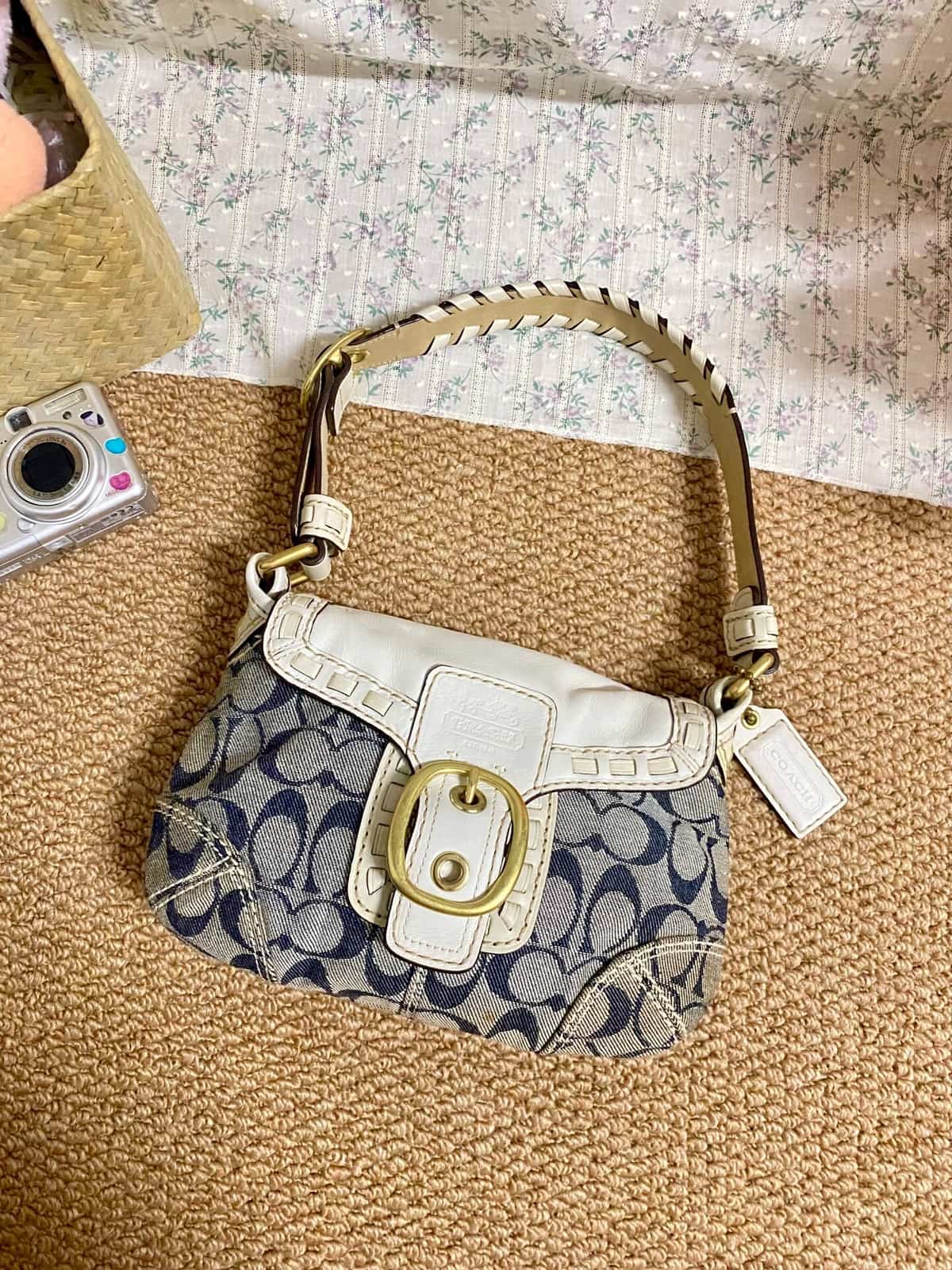 Rare
RareEmily's Archive